
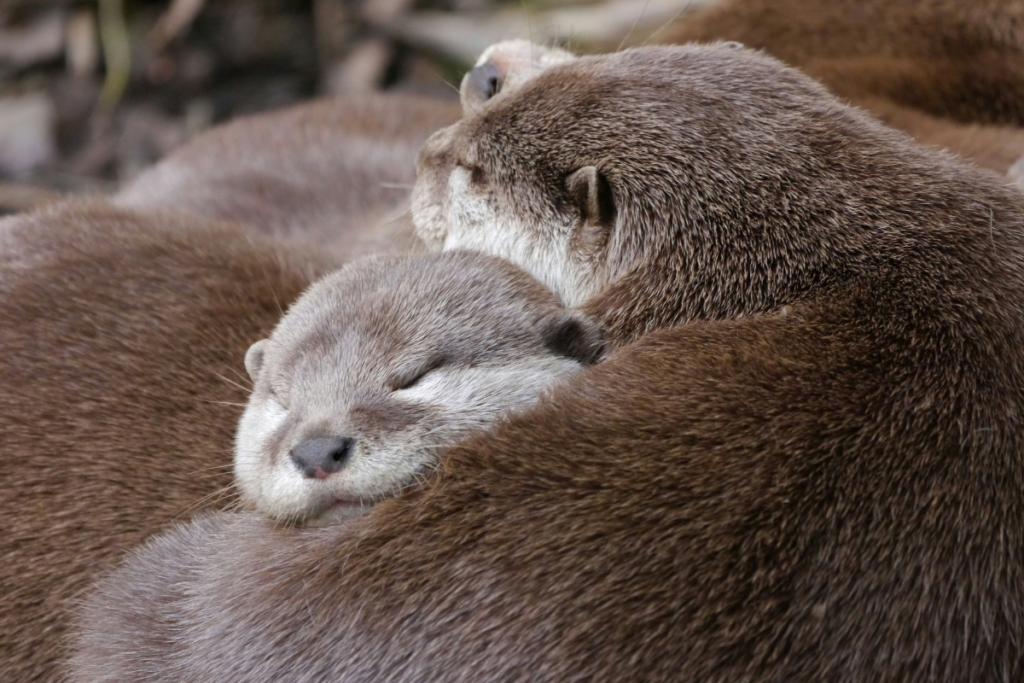
If you’ve ever ended a long day thinking, I adore this tiny person but do they have to be on me for every hour of the night too, you’re not alone. When we look for what’s “natural,” we look to nature. And in nature, one thing is very clear: animals sleep with their babies. Even the ones whose babies are far more physically capable than ours.
In fact, humans are one of the few species that even attempt to sleep separately from their young.
Animals Are Surprisingly Snuggly
This part is true and well-supported: many mammals are quite hands-off during the day, but almost all of them return to close physical contact at night.
- Some monkey species share daytime caregiving, passing babies between parents, siblings and aunties.
- Others let older juveniles carry the baby for long stretches.
- But when it’s time to sleep, the baby goes back to the mother’s body.
Night-time is when warmth, safety and regulation matter most, so closeness becomes the default. It’s not sentimental. It’s biological.
Humans Are Mammals Too
For most of human history, babies slept right next to their parents. Not because anyone read a parenting book about it, but because that is simply what mammals do. It kept babies warm, allowed for frequent feeding and helped everyone get back to sleep faster.
The idea of babies sleeping alone in a separate room is extremely new in the grand timeline of human behaviour. It is also very specific to certain cultures. Many families around the world still sleep in close proximity, and always have.
This does not mean every family must sleep a certain way. It simply means that if your baby prefers to sleep near you, they are not being “difficult”. They are being a mammal.
A Little Perspective for Tired Parents
Some evenings you might feel touched out, overstimulated or desperate for a square metre of personal space. That feeling is normal. Wanting closeness and wanting a break can coexist, and both are part of caring for a baby who still relies on your body for comfort and regulation.
And while you’re lying there wondering if you’ll ever sleep without a foot in your ribs again, it can help to remember that many animals are doing their own version of this too.
Otters hold hands so they do not drift apart.
Elephants sleep in protective family circles.
Wolf pups curl into a warm pile of siblings and adults.
Even lions, who look like they have everything sorted, still sleep in a heap.
Closeness at night is one of the most universal behaviours in the mammal world.
Whether your baby sleeps in your arms, in a bassinet beside you or in their own room, the instinct for closeness is deeply biological. Animals sleep together because it feels safe.
And if you currently have a tiny person snoring on your chest, you are participating in one of the oldest, most universal parenting behaviours on Earth.
Share this page





BUMP&baby
BUMP & baby is New Zealand’s only magazine for pregnancy and early babyhood. Our team of mums and mums-to-be understand what it’s like to be pregnant in this connected age, and that’s why BUMP & Baby online is geared toward what pregnant women and new mums really want to know.
Other articles of interest

Finding your calm
It’s estimated that one in five pregnant and postpartum women experience some form of anxiety. Here are […]

Brave… But Still Scared
You can be brave enough to grow a whole human, give birth, and survive nine months of